Common ADAS Features & the Importance of Calibration
What Is ADAS Calibration and Why Does It Matter?
Modern vehicles are designed with advanced safety technology that supports drivers in avoiding collisions and maintaining control on the road. These features are powered by Advanced Driver Assistance System (ADAS) technology. While these safety features have provided major progress in driver safety, they rely on precise calibration to function as intended. Windshield replacement, collision repairs, and certain mechanical adjustments can all affect the positioning of your ADAS technology. Understanding how calibration works and why it matters is critical for keeping your safety features operating accurately. Our blog outlines common ADAS features, calibration basics, and why professional service is essential.
Understanding ADAS Technology & Your Safety Features
ADAS is an overarching term for a system of cameras, sensors, and radar systems that monitor a vehicle’s surroundings and respond to potential hazards. These systems support drivers by providing warnings and interventions. Common ADAS features include:
- Lane Departure Warning: Alerts drivers when the vehicle drifts out of its lane.
- Lane Keep Assist: Applies steering correction to help keep the vehicle centered.
- Automatic Emergency Braking: Detects imminent collisions and applies brakes when necessary if the driver doesn’t react.
- Adaptive Cruise Control: Maintains a safe following distance, adjusting vehicle speed automatically.
- Blind Spot Monitoring: Detects vehicles in adjacent lanes and other obstacles in your blind spot.
- Rear Cross-Traffic Alert: Warns drivers of approaching vehicles or other obstacles while reversing.
- Driver Attention Monitoring: Identifies signs of driver fatigue or distraction.
These systems, and other safety systems alike, depend on accurate interpretation of surroundings. Even slight errors in sensor alignment can affect how a vehicle perceives distance, speed, or lane position.
Manufacturer-Specific ADAS Technology
Manufacturers sometimes brand their ADAS technology under different names, but the core technology is generally the same. Systems like Subaru EyeSight, Ford Co-Pilot360, Toyota Safety Sense, Honda Sensing, and Chevrolet Safety Assist all require proper calibration to meet manufacturer standards when displacement or adjustments occur.
ADAS Calibration Basics
ADAS calibration is the process of restoring the correct alignment and function of the cameras and sensors that have been disrupted. Many forward-facing cameras are mounted to or near the windshield, meaning windshield replacement alone is often enough to require calibration. Professional recalibration ensures each system is accurately reading real-world conditions and responding appropriately.
There are two main types of ADAS calibration:
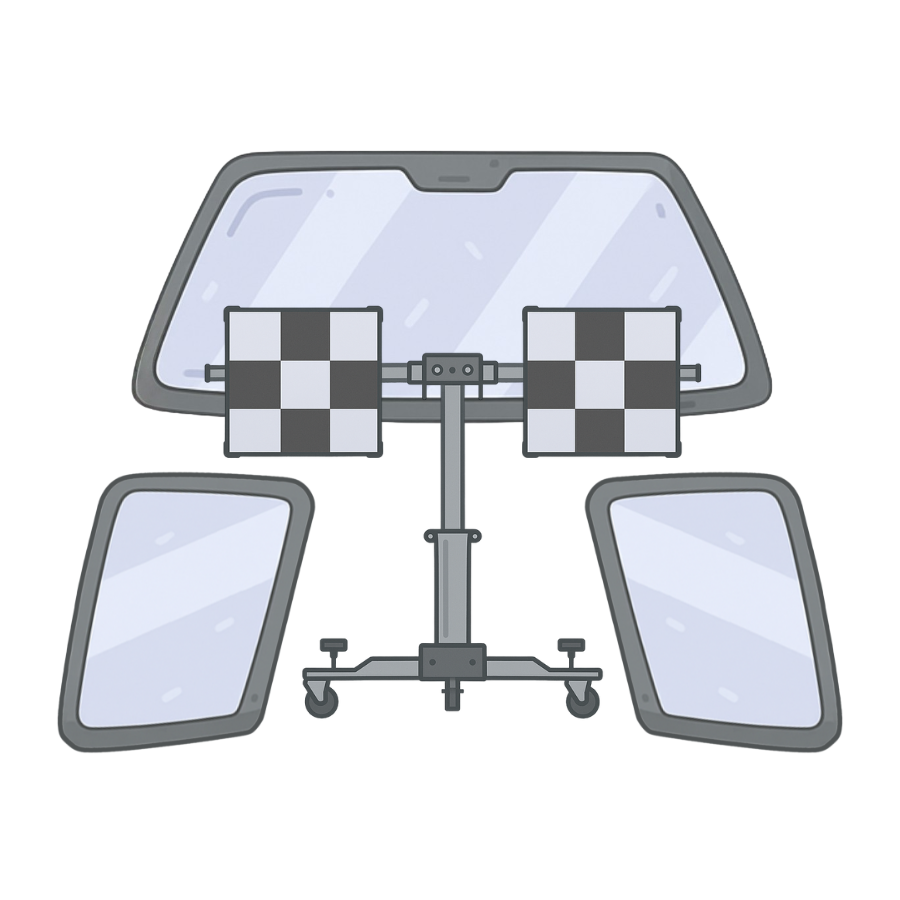
- Static Calibration: Performed in a controlled environment using specialized targets and precise measurements. Your vehicle will be positioned on a level surface with calibration equipment placed at exact distances and heights.
- Dynamic Calibration: This type of calibration requires driving the vehicle under specific conditions so the system can relearn how to read the road. Clear lane markings, consistent speeds, and specific traffic patterns are essential.
Some vehicles require only one method of calibration, while others require both. A certified technician will be familiar with the type of calibration your system requires and can perform the service according to manufacturer specifications.
Why Is ADAS Calibration Important?
ADAS technology has to be extremely sensitive to properly protect drivers on the road. Even a single degree of misalignment can translate into significant inaccuracies. These errors can cause a vehicle to mistake distances, misinterpret lane boundaries, or activate safety features at inappropriate times. Some possible issues that can occur without proper calibration include:
- Emergency braking activating when no obstacle is present
- Lane keep assist steering unexpectedly
- Adaptive cruise control inconsistency
- Failure to alert to real hazards
Because ADAS systems influence braking and steering operations, inaccuracies can affect everyone on the road, even without the driver’s direct action.
Do You Need Certified ADAS Calibration in Chandler, AZ?
For drivers who need
ADAS calibration in Chandler, AZ, Boon’s Auto Glass offers precise, certified calibration services designed to restore system accuracy after windshield replacement or collisions. We perform both static and dynamic calibrations based on manufacturer requirements, helping ensure safety features operate correctly.
Contact Boon’s Auto Glass to schedule your ADAS calibration in the
Chandler,
Queen Creek, and
Phoenix, AZ areas.